
Death Index Records in Clarendon County
Clarendon County death index records cover deaths in the county from January 1, 1915. The county seat is Manning, located in the east-central portion of South Carolina. Clarendon County vital records from 1915 forward can be ordered by mail or in person through the state system. This guide covers how to search the Clarendon County death index, which offices hold the records, and what to know about the county's historical record loss in 1911.
Clarendon County Quick Facts
Clarendon County Death Records Overview
Clarendon County is located in the east-central part of South Carolina. The county seat is Manning. The county uses an elected coroner system for death investigations. The coroner has jurisdiction over all deaths occurring outside of hospitals or nursing homes, as well as sudden, suspicious, and violent deaths anywhere in Clarendon County. The coroner signs death certificates and issues burial-removal-transit permits.

The Clarendon County government portal provides access to county offices and services, including vital records and local department contacts.
Clarendon County vital records for 1915 to the present can be ordered through the Vital Records office at the Clarendon Public Health Department in Manning. Mail requests can also go directly to the state office in Columbia. The county health department acts as the local registrar for vital records and can assist with questions about Clarendon County death certificates.
A Clarendon County death certificate includes the person's name, place and time of death, age at death, and may also include cause of death, marital status, occupation, parents' names, and burial information. These details make death certificates valuable both for legal purposes and for genealogical research.
South Carolina Vital Records Law
Death certificates in Clarendon County are governed by SC Code Title 44, Chapter 63. This law requires that death certificates be filed within five days of death. Electronic filing is mandatory for all providers in South Carolina. County health departments serve as county registrars. Coroners must issue burial-removal-transit permits for deaths that occur outside of licensed healthcare facilities. After 50 years, death records become public records open to anyone.
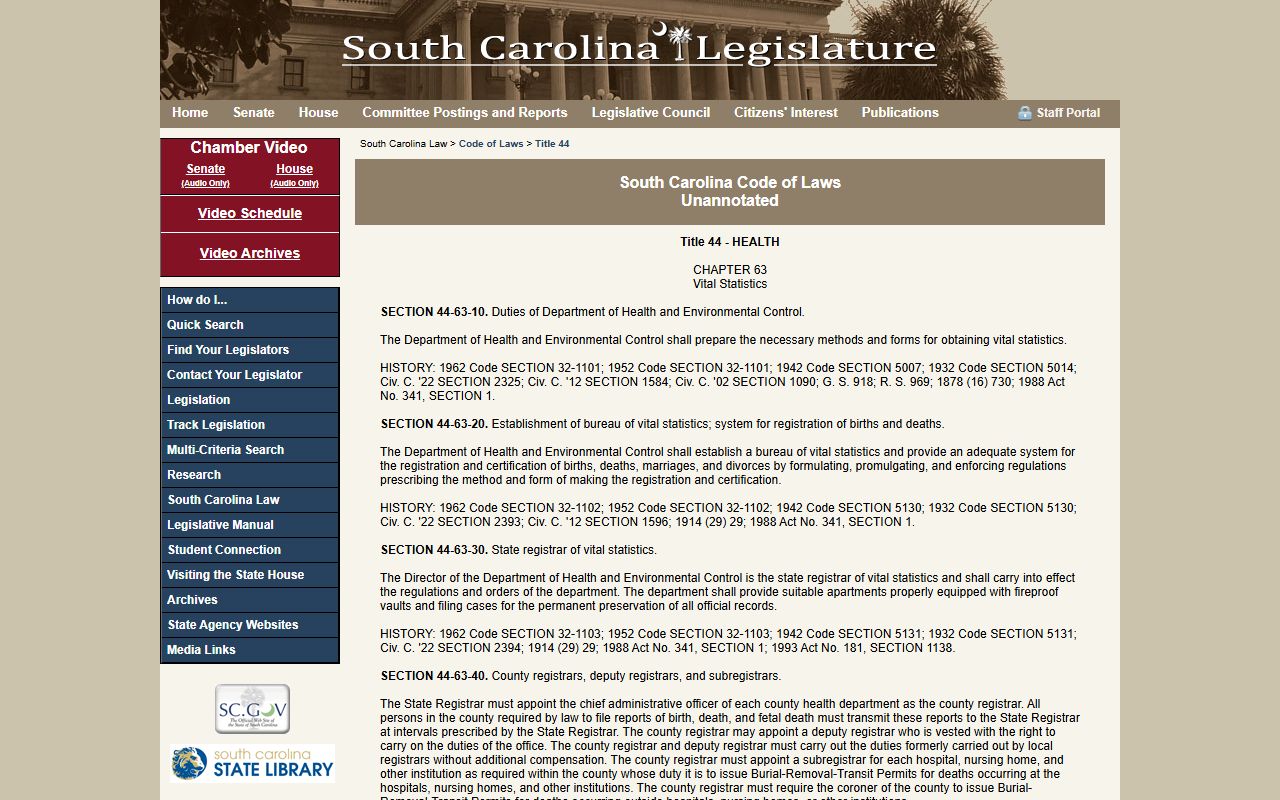
The SC Vital Statistics Code at Title 44, Chapter 63 sets the rules for how death certificates are created, filed, and accessed across all South Carolina counties including Clarendon County.
The 50-year rule is important for genealogical research. Deaths that occurred in Clarendon County before 1976 are now public records. Any person may request an uncertified copy by paying the required fee and submitting a request to the SC Department of Public Health. This opens a large portion of the Clarendon County death index to unrestricted research.
Note: The Ancestor Hunt death records directory lists free online Clarendon County death indexes. These are useful starting points before ordering a certified copy.
Clarendon County Historical Record Loss
Clarendon County experienced record loss in 1911 when the courthouse was damaged. This affects some records from the period immediately before 1911. The impact on genealogical research is mainly for pre-1915 records, since statewide death registration did not begin until 1915. However, researchers looking for marriage, court, or land records from just before 1911 may find gaps in the Clarendon County collections.
For deaths before 1915, statewide registration did not exist. Clarendon County was established in 1785. Researchers seeking deaths from the colonial period or the 1800s must use alternative sources. Church records are the most valuable substitute. The Church Act of 1706 directed the established church to record births, marriages, and burials. Family Bibles often contain death entries for the same period. Cemetery records are another strong source.
The South Carolina State Archives at scdah.sc.gov at 8301 Parklane Road, Columbia SC 29223 holds early Clarendon County records including colonial documents, military records, and county administrative files. The Archives also holds microfilm copies of Clarendon County newspapers, which may contain obituaries and death notices that can serve as substitutes for official certificates. The FamilySearch wiki at familysearch.org covers all South Carolina counties including Clarendon and explains which records exist and where to find them.
Requesting Clarendon County Death Certificates
Certified copies of Clarendon County death certificates are issued by the South Carolina Department of Public Health. The state office is at 2600 Bull Street, Columbia, SC 29201, phone (803) 898-3630. Mail requests go to SC Department of Public Health, Vital Records Section, P.O. Box 2046, West Columbia, SC 29171. Online orders go through Go Certificates or VitalChek. Phone orders use VitalChek at 1-877-284-1008, available every day of the week.
The standard search fee is $12, with each additional copy costing $3. Expedited service is $17. A valid government-issued photo ID is required. Only immediate family members or legal representatives can obtain certified copies of records from the last 50 years. Records more than 50 years old are available to the general public. The SC DPH death certificates page has current forms and fee schedules.
The Ancestor Hunt directory links to free Clarendon County death index tools that can help identify records before ordering certified copies.
| State Vital Records |
SC Department of Public Health 2600 Bull Street Columbia, SC 29201 Phone: (803) 898-3630 |
|---|---|
| Hours | Monday through Friday, 8:30 AM to 5:00 PM |
| County Website | clarendoncounty.org |
Communities in Clarendon County
Manning is the county seat of Clarendon County and the center for county services including death records. All Clarendon County deaths are processed through the county coroner and filed with the state vital records system. The county public health department in Manning handles local death certificate requests.
Nearby Counties
Clarendon County is in the east-central part of South Carolina. Death records are kept in the county where the death occurred. Check the right county before requesting a record.